• Skip to primary navigation
  • Skip to main content

Skip links

  • Jump to main navigation
  • Jump to content

Migrant Rights Network

Main navigation

  • Take Action
  • Meetings and Events
  • Updates
  • About
  • Donate
  • Facebook
  • Twitter
  • Instagram

fatima

fatima, Author at Migrant Rights Network

ADIVSORY: Migrants Demand Equal Rights on Eve of Parliament’s Return

Posted on September 9, 2024

MEDIA ADVISORY
Migrant Rights Network

Migrants Demand Equal Rights on Eve of Parliament’s Return

Cities Across Canada Unite to Demand Permanent Residency for All Migrants and an End to Racist Scapegoating

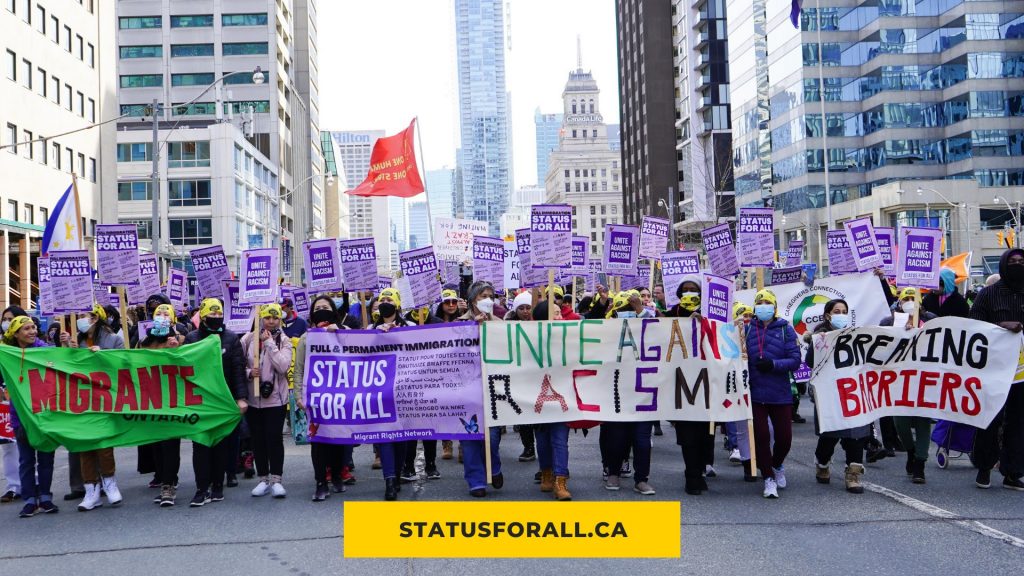
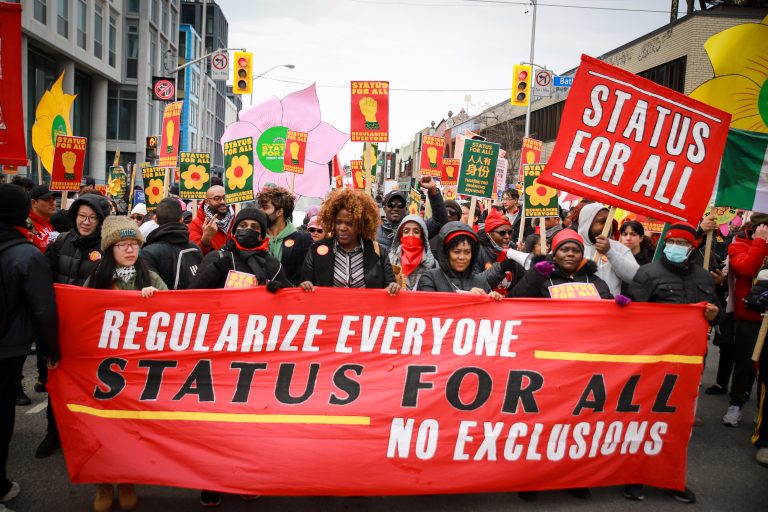
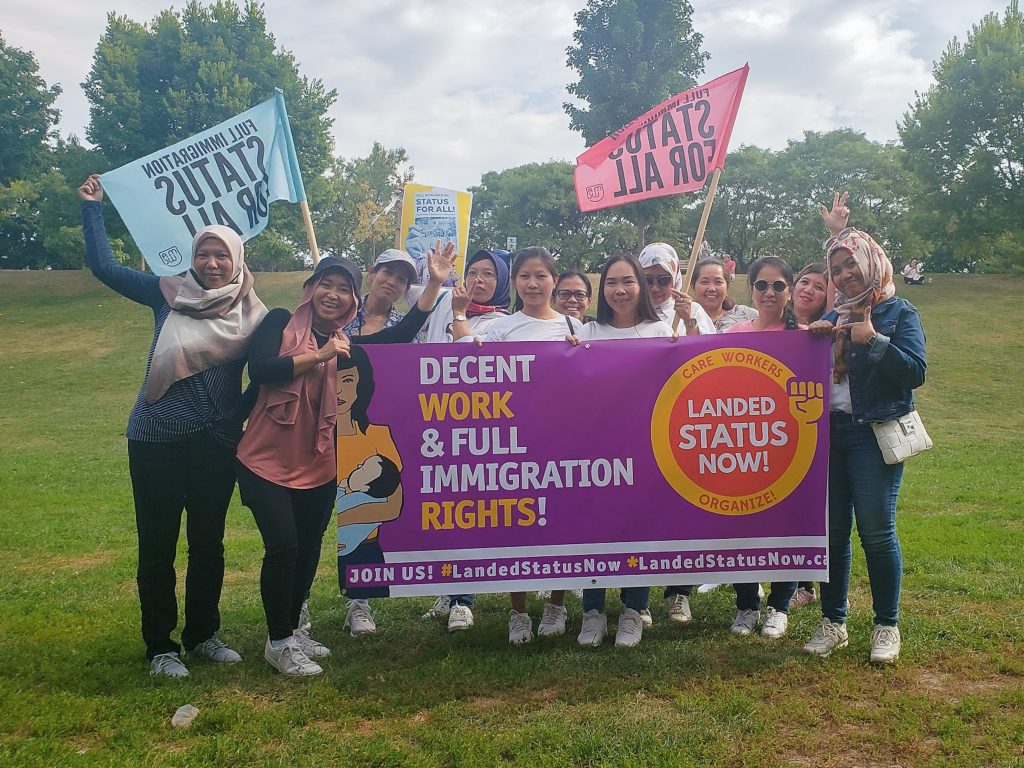
On the eve of Parliament’s return, massive, colourful actions will take place in eight cities across Canada, demanding equal rights and permanent resident status for all migrants and rejecting the racist scapegoating of migrants for the housing, healthcare, and affordability crises. Coordinated by Migrant Rights Network, the rallies, marches and protests are scheduled from September 12-15.

Without permanent resident status, migrants—including refugees, temporary foreign workers, current and former international students, and undocumented people—face mistreatment at work, exploitation by landlords, separation from their families, and are denied rights and protections afforded to others in Canada. Increasing anti-migrant sentiment is resulting in increased hate-motivated attacks and abuses. 

Prime Minister Trudeau promised to ensure permanent resident status and regularization for migrants. Instead of ensuring rights for migrants, Canada has capped study permits, barred most study permit holders from bringing their families, limited permanent residency, slashed work permits, refused to renew permits for graduated international students, imposed visas on Mexico, and increased visa denials.

Provincial governments responsible for housing, jobs, wages, education, and healthcare have joined in on the scapegoating of migrants to distract from their own policy failures. Many have also slashed or attempted to reduce refugee entries and have cut down on permanent residency approvals through provincial nominee programs.

WHAT: Cross-country actions against racism and for immigrant justice
WHEN: September 12-15, 2024
WHO: Migrant Rights Network and community organizations across Canada
WHY: To demand equal rights, permanent resident status for all migrants, and to reject racist scapegoating in the housing, healthcare, and affordability crises.
VISUALS: Hundreds of people in rallies, meetings or marches with massive banners, community members, hand-painted signs and flags of national and local organizations.  

Event Details:

  • September 12, 2024
    • CHARLOTTETOWN: 5:00 PM, Boulder Park (Grafton St)
      Media contact: Ryan MacRae, 902-916-6510, Cooper Institute
  • September 14, 2024
    • EDMONTON: 1:00 PM, Federal Building
      Media contact: Marco Luciano, 780-966-5908, Migrante Alberta
    • PETERBOROUGH: 12:00 PM, Constituency office of Michelle Ferreri
      Media contact: Peter Votsch, 416-891-8601
    • SUDBURY: 1:00 PM, Afro Women and Youth Foundation Community Centre
      Media contact: Scott Florence, 705-470-3323, Sudbury Workers Education and Advocacy Centre
    • VANCOUVER: 1:00 PM, Grandview Park
      Media contact:  Roxana Sonora, 236-880-9205, Migrant Workers’ Centre
  • September 15, 2024
    • MONCTON: 2:00 PM, Riverfront Park
      Media contact: Niger Saravia, 506-251-7467, Migrant Workers Alliance for Change
    • OTTAWA: 2:00 PM, Human Rights Monument
      Media contact: Karen Cocq, 647-970-8464, Migrant Rights Network
    • TORONTO: 1:00 PM, City Hall
      Media contact: Fatima Hussain, 647-773-2068, Migrant Rights Network – Ontario

Migrant Rights Network is Canada’s largest migrant-led coalition, comprising nearly 40 organizations in 8 provinces. Formed in Decemebr 2018, Migrant Rights Network is the only cross-country body that brings together self-organized migrants to unite for immigration and worker justice.

Contact for cross-Canada inquiries: Syed Hussan, 416-453-3632, hussan@migrantworkersalliance.org
Reflecting on 10 years of care worker struggles and victories

Posted on June 12, 2024

Something incredible happened on June 3rd. The federal government announced that migrant care workers who come to Canada will be able to get permanent resident status on arrival.

This means that migrants, primarily racialized women, who take care of children, sick and the elderly will be able to come as permanent residents and not as temporary foreign workers.

For decades, migrant workers have been told that our demand for a single tier system with permanent resident status on arrival for all is impossible. But through struggle and perseverance, migrants have won against all odds.

We won even more:

  • Since 2014, care workers have been calling for an end to the requirement that they have their one-year post-secondary education accredited. Now, care workers will only have to get high school accreditation.
  • Care workers have been fighting to get rid of language scoring requirements. Now care workers will only need a language benchmark score of 4 (instead of 5).

As a result, thousands of care workers in Canada may become eligible for permanent residency.

But concerns remain.

  • thousands of care workers, like other migrant workers, students and refugees have become undocumented because of unfair rules. This is why we must continue to demand regularization of all undocumented people.
  • The program has not been finalized and launched yet. It’s not clear when it will be – the Minister has said somewhere between Fall 2024 and early 2025. While we wait, more care workers will continue to face exploitation or become undocumented.
Send an email to PM Trudeau now asking him to ensure regularization for all

Now is a moment to reflect on a decade of struggle. Here are snapshots of care worker action since 2014 when the education and language requirements were first put into place.

Snapshots of a decade of struggle

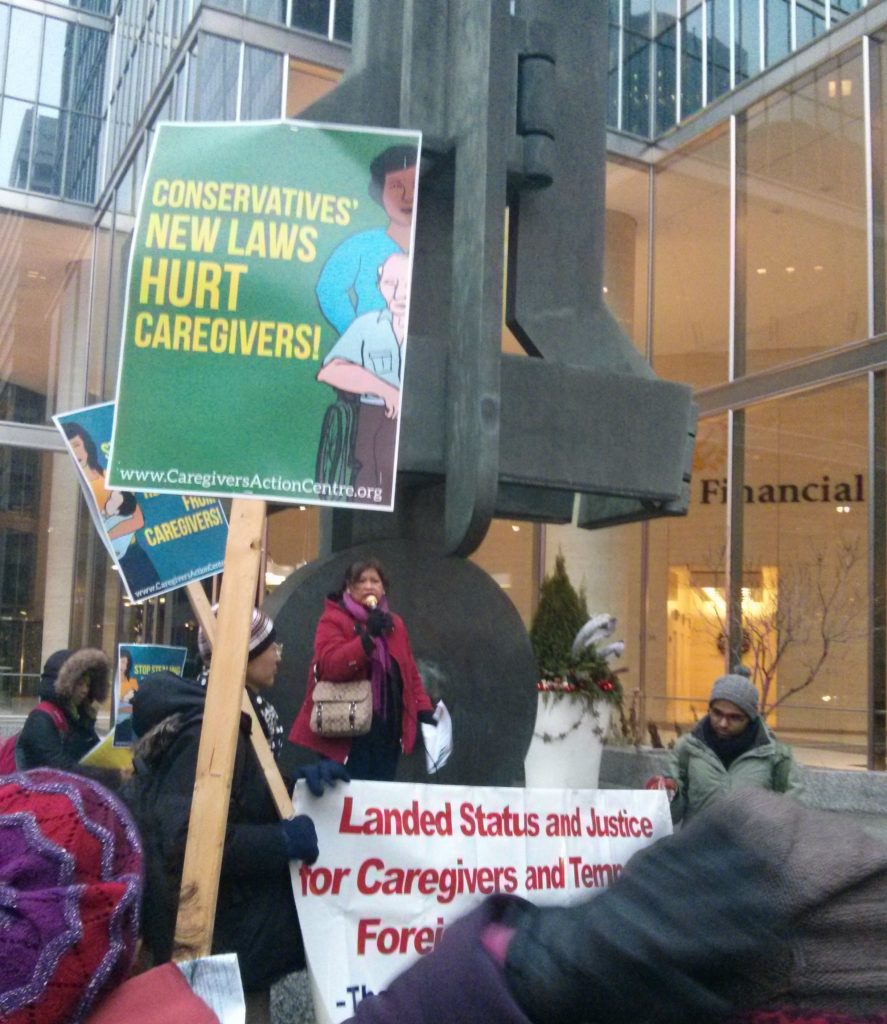
October 31, 2014: Then Conservative Immigration Minister Chris Alexander ended the permanent caregiver program and replaced it with two 5-year long pilot programs, which continue until 2019. This new program increased language testing scores needed to qualify and added a requirement for one year post-secondary education. Care workers sprang into action organizing mass demonstrations across Canada including in Toronto. Read more here.

October 28, 2015: Care workers joined with farmworkers, and other migrant workers to create the Coalition for Migrant Worker Rights – Canada (CMWRC). CMWRC was the first migrant-led cross-Canada platform for all migrant workers to take action together and was formed just as a new Liberal government was elected in the same month.

May 2016: We forced a Parliamentary study on migrant exploitation. Migrant care worker “Teta Bayan” was scheduled to speak. She was bumped off the committee and wrote an open letter calling on PM Trudeau to deliver on his promise of change. Read here. Care worker groups submitted a detailed proposal to Parliament calling for changes to the same study, read here. 

September 2016: Care workers took on organizing against medical inadmissibility. Medical inadmissibility are rules that ban migrants from getting permanent residency because the government believed that they were too sick. Care workers told their stories in the media, visited politicians and gathered petitions. Read here. We finally won changes in 2018.

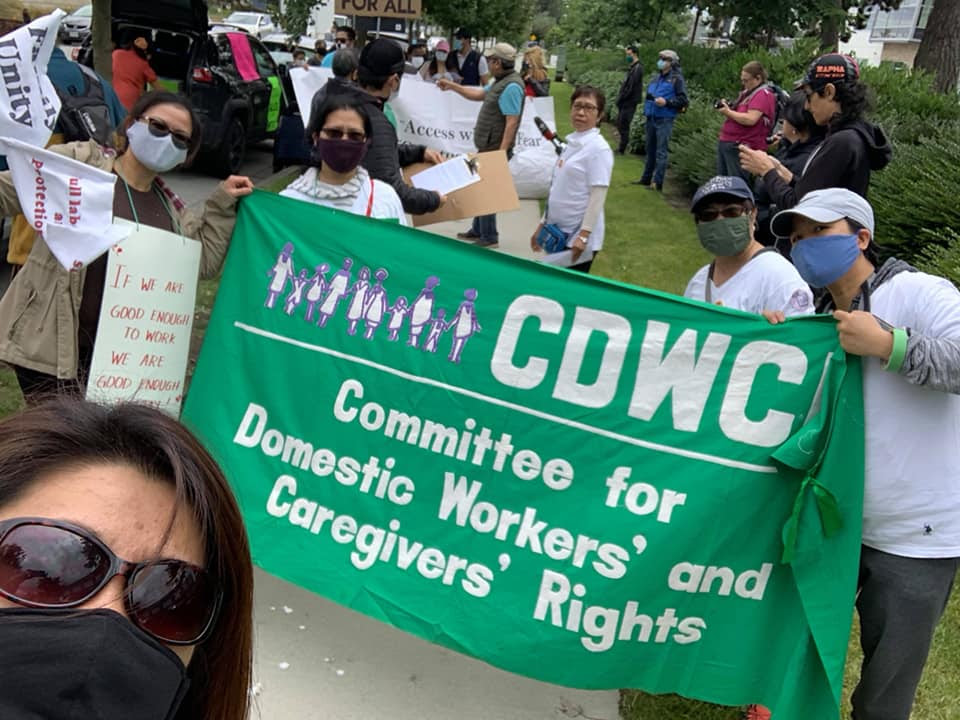
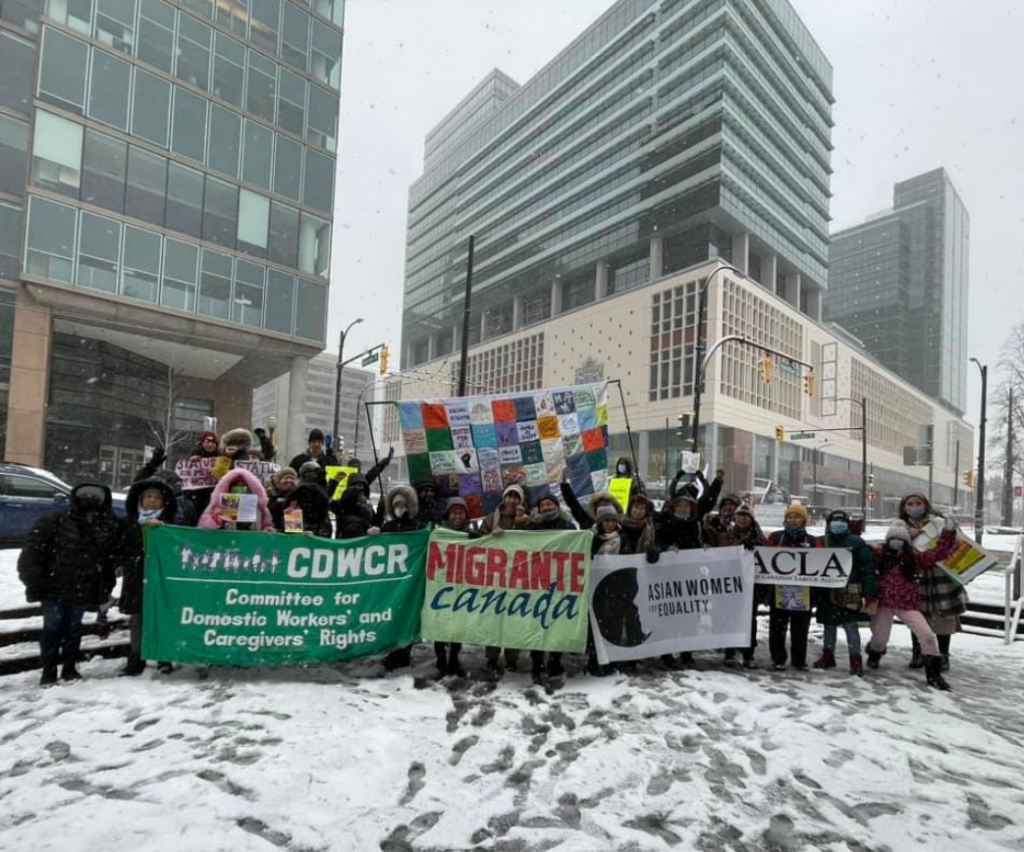
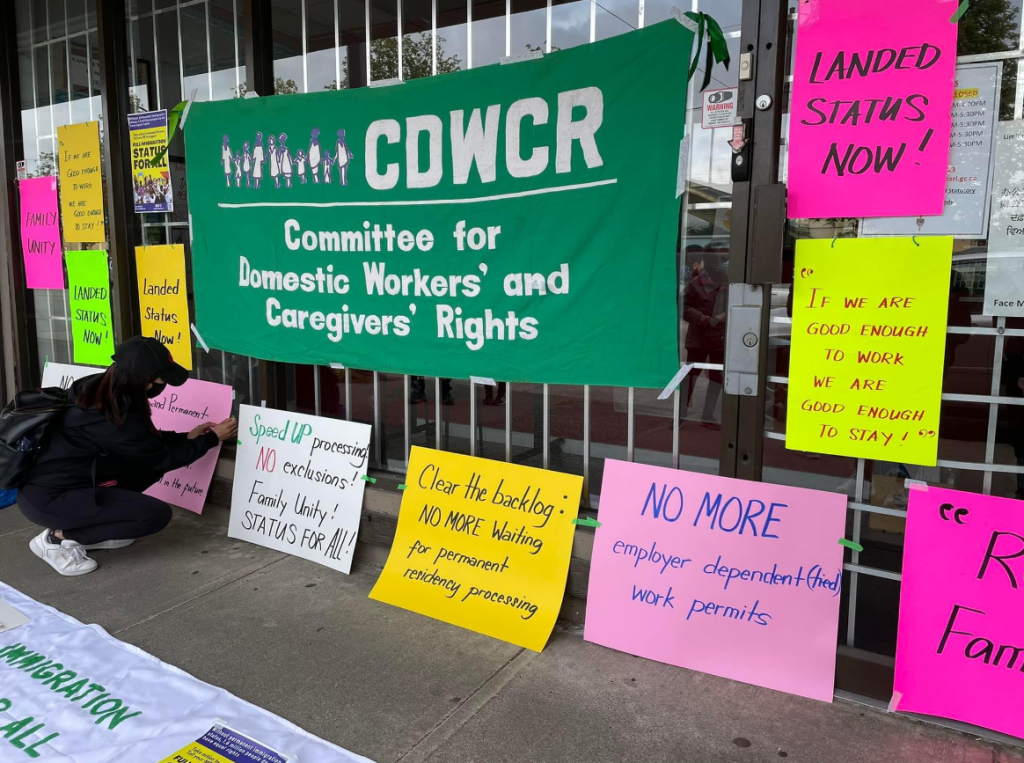
2017: Throughout 2017, migrant care workers organized across the country, hosting workshops and public events, doing outreach in communities and identifying concerns. Vancouver Committee for Domestic Worker and Caregiver Rights hosted this workshop.

Mother’s Day 2018: Across the country, migrant care workers escalated actions on Mother’s Day organizing media events calling for changes. In Toronto, care workers organized an action dressed as robots insisting that migrants were not machines. Read about Toronto here and Vancouver here.

Summer 2018: Migrant care workers surveyed each other and collected petitions to organize themselves with just one year left in the pilot program. Throughout the year, care workers participated in consultations calling for changes. Read here.

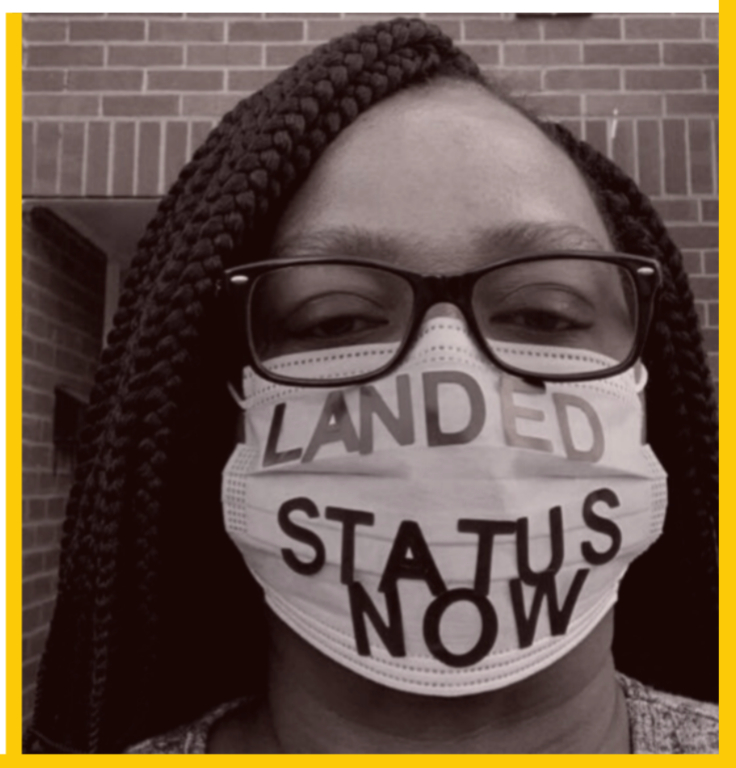
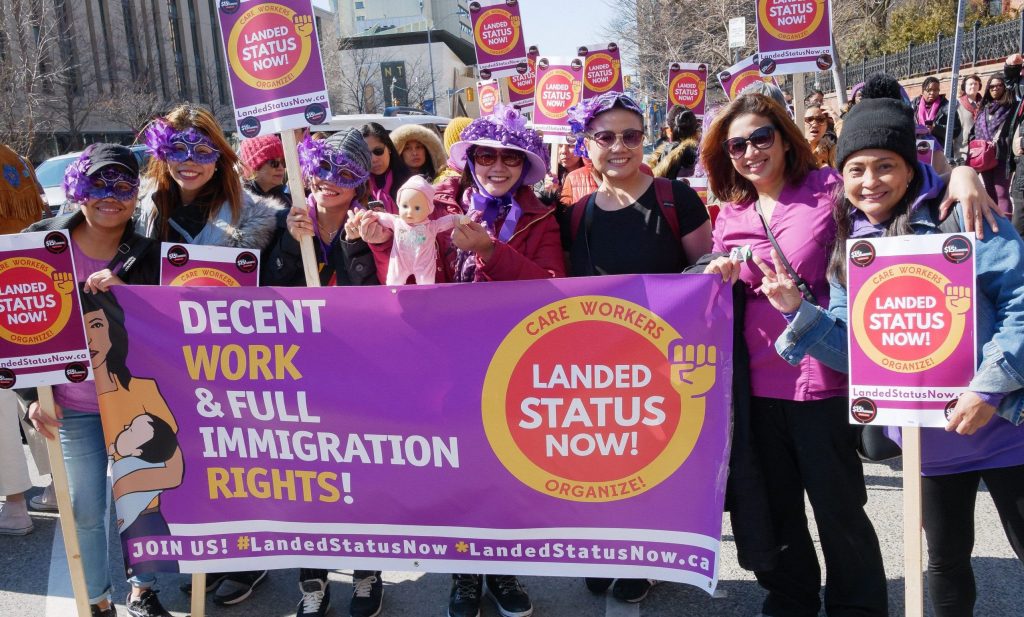
November 18, 2018: Landed Status Now, an umbrella formation of care workers across Canada, issued a report detailing abuses and demanded permanent resident status on arrival and removal of language and education restrictions. Read about it in the CBC here and here, and read the report here.

December 18, 2018:The Migrant Rights Network launched and replaced CMWRC. This newly formed coalition would now be the home of all migrant-led organizing in Canada, and carried forward the Landed Status Now campaign.

February 23, 2019: Under massive pressure from care workers – Canada announced an interim pathway! Care workers in Canada were able to apply for permanent residency without the high education requirements, but the language requirements were kept in place. The interim program ran from March to June – just three months. Unbelievably, the government also replaced the 2014-2019 pilots with new pilots that had the same unfair language and education requirements. Care workers were pre-assessed for permanent residency and would have to complete two years of work before they could apply again to get it.

May & June 2019: Care workers organized actions across Canada demanding changes to the new pilots and extensions to the interim program. See here. Thousands of people signed petitions and took action. Under pressure the federal government extended the Interim Pathway by another three months, until the end of October.

March 2020: The COVID-19 outbreak threw migrant care workers into crisis. Many were working longer hours, unable to leave; while others were laid off as their employers worked from home. Caregivers spoke up about being banned by their employers from leaving the house, to buy groceries or send money home. Those who were laid off had nowhere to go, many would become undocumented.

October 2020: Care workers across the country released a report documenting the increased abuse and exploitation that they were facing behind closed doors. The report consisted of hundreds of interviews and surveys and made national headlines. Read about it in the Toronto Star here and CBC here. The report included video interviews, watch them here.

April 14, 2021: Under pressure from migrant organizing – Canada created the ‘Temporary Resident to Permanent Resident’ pathway for over 90,000 migrant workers. Among other changes, this pathway removed requirements for education, reduced the language and work requirement (from 24 months to 12 months) – but the program was time-limited and difficult to apply for. Some care workers were able to apply; while many remained excluded. The program ran for six months. Read our report on it here. At the same time, the federal government promised to clear the backlog of applicants – with thousands still waiting for years to hear about their permanent residency application, see here.

December 16, 2021: Following the 2021 federal elections, Prime Minister Trudeau returned to power at the head of a minority government. He issued a mandate letter to the Minister of Immigration that promised regularization and rights for migrants.

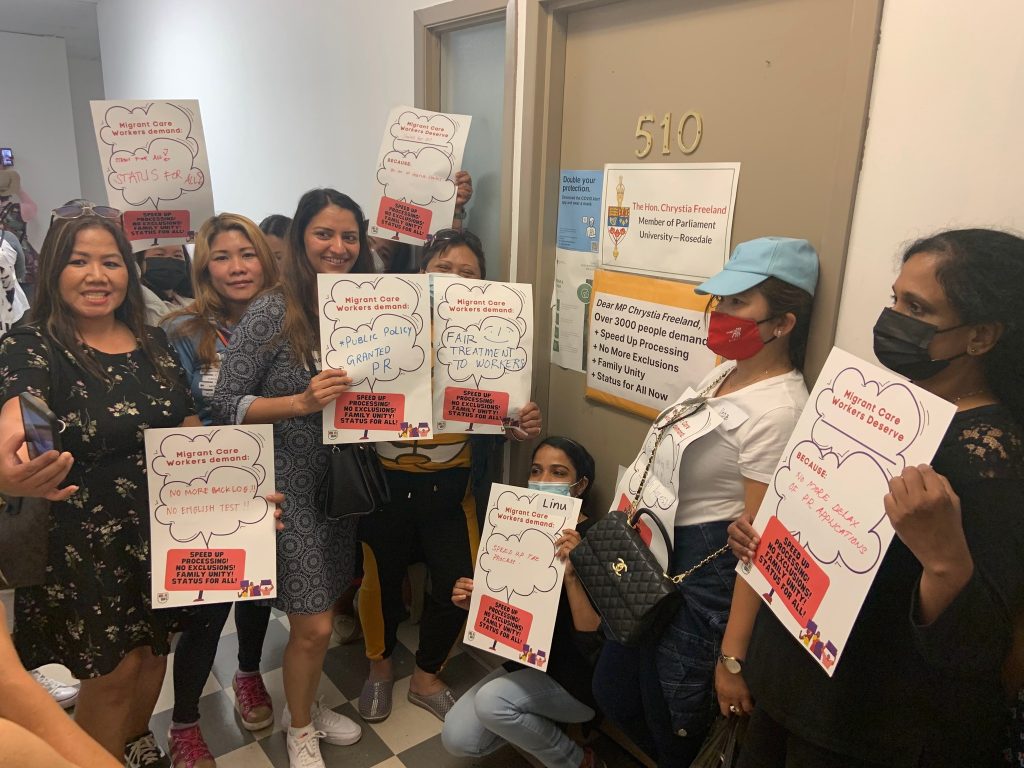
May 29, 2022: Migrant care workers delivered over 3,000 petitions to MPs across the country calling for an end to education and language requirements, an end to the processing backlog and permanent resident status on arrival. 

2022 – 2023: Across the country, care workers prepared for the expiry of the pilot, gathering thousands of petition signatures, coordinating with allies, meeting with elected officials and Ministry staff, and sharing stories on social media. In monthly actions – care workers raised their demands across the country.

February 10, 2023: Care workers won a major victory – the work experience required to gain permanent residency was reduced by half – from 24 months to 12 months. Care workers were one more step close to permanent resident status on landing.

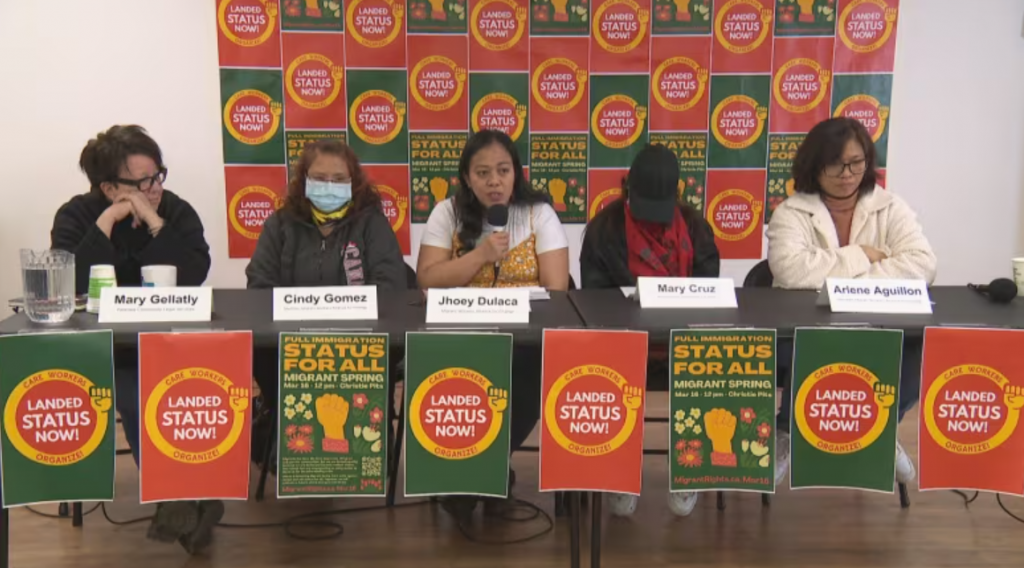
March 8, 2024: On International Women’s Day – migrant care workers organized a press conference calling for an end to education and language requirements and permanent resident status on arrival. Read more here.

June 3, 2024: Canada announced new pilot programs lowering the education and language requirement and promising permanent resident status on arrival.

We have been fighting for decades, and we will not stop until we have won justice, equality and liberation for all.

Regularization a litmus test of Trudeau’s commitments / La régularisation est un test décisif du respect des engagements de Trudeau

Posted on May 27, 2024


Français

Media Advisory
Migrant Rights Network

Media Liaison (EN/FR): Karen Cocq, karen@migrantworkersalliance.org, 647-970-8464

Watch on CSPAN: https://www.cpac.ca/headline-politics/episode/undocumented-immigration-coalition-calls-for-regularization-plan?id=b3e0a76a-87f6-4258-90fc-0dd56c0c6d75

Regularization a litmus test of Trudeau’s commitments

Ottawa, May 27, 2024 – Canada’s largest labour, faith, women’s rights, housing, and migrant groups, representing over 500 organizations, convened on Parliament Hill today to show support for Prime Minister Trudeau’s promise of permanent resident status for undocumented people, known as regularization. Regularization will ensure equality and fairness for some of the most marginalized people in our society and will serve as an engine of economic growth. 

Over 500 organizations support regularization because: 

  • Economic Growth: Regularization will add at least $28 billion to the economy annually and increase EI and CPP contributions by $5.6 billion per year.
  • Global Best Practices: 24 of the 27 EU Member States have implemented regularization programs, benefiting an estimated 6 million undocumented people.
  • Equality & Human Rights: Undocumented people already live and work in Canada but can’t access the same rights as everyone else. Only with regularization can gender equality and fairness for marginalized communities be realized.
  • Protection from abuse: Undocumented workers, women, queer, and trans people face exploitation at work and are taken advantage of because of their lack of permanent resident status. Regularization will allow marginalized communities to protect themselves.
  • Historic & Legacy Defining: Regularization is a test of PM Trudeau’s pro-immigrant, pro-LGBTQ2I, and feminist commitments. It is an investment in generations to come.
  • Honours PM Trudeau’s Promise: Prime Minister Trudeau pledged regularization in December 2021 and only he has the power to deliver on this bold promise.

Quotes

“If I go back to Uganda, I’ll face life in prison or I will be killed because society doesn’t believe in same-sex relationships. Without permanent residency status, I don’t have authorization to work, I can’t access good jobs, I can’t even afford to buy food. We are your neighbours, your coworkers, your friends. We deserve equal rights like everybody else and the only way to have it is if we all have permanent residency status.”
– Jane Kirabira, undocumented lesbian woman, member of Migrant Workers Alliance for Change

“Undocumented people live and work here, building our community and economy, but because they do not have status, they are vulnerable to abuse and exploitation. Regularization will allow workers to leave bad jobs and punish bad actors, leveling the playing field and improving working conditions for everyone. The CLC joins this call for a broad regularization program so that undocumented people can contribute to their fullest potential to Canada’s economic and social future.”
– Siobhán Vipond, Executive Vice-President, Canadian Labour Congress

“Migrants and undocumented individuals are already here, contributing to our society in countless ways. They are not responsible for the housing crisis, but they are deeply affected by it. Denying them permanent residency only exacerbates vulnerability and limits their potential to fully contribute to our nation’s growth.”
– Michele Biss, National Director, National Right to Housing Network

“Over half of the people Action Canada supports for abortion care are undocumented or uninsured. Without financial aid and the extraordinary efforts of healthcare providers, they would be denied critical medical procedures that are essential to bodily autonomy, gender equality, and the health of families and communities. The right to make choices about our bodies and to give birth safely shouldn’t be a privilege. We want to live in a country where these rights are protected and honored. Regularizing the status of undocumented people is a crucial step toward achieving that goal.”
– Frédérique Chabot, Executive Director, Action Canada for Sexual Health and Rights

“The people of The United Church of Canada hold the belief that we are called to show radical hospitality to our neighbours near and far. We believe in the dignity of every person, and a vision of an equitable and just country and world. These beliefs lead us to call on Canada to ensure equal rights for all by regularizing undocumented migrants, persons who contribute greatly to the flourishing of our country.  Regularization, which advances labour, gender, and racial justice, will help enable all to live with dignity and access to the fullness of human rights.”
– Rev. Jennifer Henry, Executive Minister, The United Church of Canada

“We firmly renounce the xenophobic and racist rhetoric of certain political parties and elected representatives, who turn migrants and immigrants into scapegoats. Prime Minister Trudeau, keep your promise and create a complete and comprehensive regularization program, without further delay! In Quebec, our position and demand are shared by dozens of organizations already active in the common fight for regularization, as well as by many more organizations and individuals who have confirmed their strong support.”
– Cheolki Yoon, Immigrant Workers Centre (CTTI-IWC)

“Regularization will uplift marginalized migrants, the most vulnerable of whom are women, queer and trans people, and it is therefore a litmus test of Prime Minister Trudeau’s pro-immigrant, pro-queer and feminist commitments. Hundreds of organizations are joining together calling on PM Trudeau to create a comprehensive and inclusive regularization program that will ensure equality and fairness, while investing in the economy and funding public services for generations to come.”
– Syed Hussan, Migrant Rights Network

###

Migrant Rights Network is Canada’s largest migrant-led coalition. We ensure the leadership of people without permanent resident status – migrant workers, international students, undocumented people, refugees and families. Member organizations of Migrant Rights Network have a long-standing commitment to ensuring regularization, and have been at the forefront of organizing for immigration justice for over 20 years.

www.migrantrights.ca 

See our regularization proposal here: www.migrantrights.ca/regularization 

####

Over 500 organizations – outside of the immigrant and refugee sector – support regularization including:

Major Labour Organizations: Canadian Labour Congress; Canadian Union of Postal Workers; Canadian Union of Public Employees (CUPE); Canadian Union of Public Employees (CUPE) Ontario; Centrale des syndicats démocratiques (CSD); Centrale des syndicats du Québec (CSQ); Confédération des syndicats nationaux (CSN); Elementary Teachers of Toronto; Fédération des travailleurs et travailleuses du Québec (FTQ); Fédération du travail de l’Ontario | Ontario Federation of Labour; Fédération interprofessionnelle de la santé du Québec (FIQ); Manitoba Federation of Labour (MFL); National Farmers Union; National Union of Public and General Employees; New Brunswick Federation of Labour; Newfoundland and Labrador Federation of Labour; Nova Scotia Federation of Labour; Ontario Public Services Employees Union; PEI Federation of Labour; Saskatchewan Federation of Labour; SEIU Healthcare; Toronto & York Region Labour Council; UNIFOR; United Food and Commercial Workers; United Steelworkers; and Yukon Federation of Labour

Major Faith Organizations: Anglican Church of Canada; Diocese of Hamilton; Evangelical Lutheran Church in Canada; KAIROS Canadian Ecumenical Justice Initiatives; Office of the National Indigenous Anglican Archbishop; The Federation of Sisters of St. Joseph of Canada; and The United Church of Canada.

Major Climate Organizations: Climate Action Network Canada; ClimateFast; Future Ground Network – David Suzuki Foundation; Environmental Defence; Foire ÉCOSPHÈRE; Greenpeace Canada; Indigenous Climate Action; and MiningWatch Canada.

Major Housing & Anti-Poverty Organizations: BC Poverty Reduction Coalition; Campaign 2000; Canada Without Poverty; Citizens for Public Justice; Collectif pour un Québec sans pauvreté; Food Secure Canada; Front d’action populaire en réaménagement urbain (FRAPRU), United Way Centraide Canada and YWCA Canada. 

Major Civil Society Organizations: Amnistie internationale Canada francophone; Canadian Centre for Policy Alternatives; Council of Canadians; Leadnow and Oxfam Canada. 

Major Health Organizations: Access Alliance Multicultural Health and Community Services; Action Canada for Sexual Health and Rights; Canadian Health Coalition; Canadian Federation of Nurses Unions; Healthcare for All Coalition; Médecins du Monde Canada; and Ontario Nurses’ Association. 

Major Legal Organizations: B.C. Civil Liberties Association (BCCLA); Canadian Association of Refugee Lawyers; Canadian HIV/AIDS Legal Network / Réseau juridique canadien VIH/sida; Clinique pour la justice migrante (CJM); Inter Clinic Immigration Working Group (“ICIWG”); Ligue des droits et liberté (LDL) and Women’s Legal Education and Action Fund Inc (LEAF). 

Click here for the full list. 


Avis aux médias
Réseau des droits des migrants

Liaison avec les médias (EN/FR) : Karen Cocq, karen@migrantworkersalliance.org, 647-970-8464

La régularisation est un test décisif du respect des engagements de Trudeau

Ottawa, 27 mai 2024 – Plus de 500 organisations parmi les plus importantes, au Canada, de travailleuses et de travailleurs, de croyant.e.s, de défense des droits des femmes et des personnes migrantes et immigrantes ainsi que celles agissant pour le logement, se sont réunies aujourd’hui sur la Colline du Parlement : elles ont ainsi manifesté leur soutien à la promesse, connue sous le terme de régularisation, du Premier ministre Trudeau d’accorder la résidence permanentes aux personnes sans papiers. La régularisation garantira l’égalité et l’équité pour ces personnes parmi les plus marginalisées de notre société et servira de moteur à la croissance économique. 

Pourquoi la régularisation est importante :

  • Impact économique : La régularisation ajoutera au moins 28 milliards de dollars à l’économie chaque année et augmentera les cotisations à l’assurance-emploi et au RPC de 5,6 milliards de dollars par an. 
  • Précédents au niveau mondial : 24 des 27 États membres de l’UE ont mis en œuvre des programmes de régularisation, dont bénéficient environ 6 millions de personnes sans papiers.
  • Droits humains : Les personnes sans papiers vivent et travaillent déjà au Canada, mais ne bénéficient pas des mêmes droits que les autres. La régularisation est le mécanisme qui leur permet d’accéder aux droits civils, politiques et sociaux. En outre, c’est une condition nécessaire pour assurer l’égalité des sexes et l’équité pour les communautés marginalisées.
  • Protection contre les abus : Les travailleuses et travailleurs sans papiers, les femmes, les personnes homosexuelles et les transgenres sont victimes d’exploitation au travail parce qu’ils n’ont pas le statut de résident permanent. La régularisation permettra aux communautés marginalisées de se protéger.
  • Test décisif et legs : La régularisation est un test du respect des engagements pro-immigration, pro-LGBTQ2I et féministes du Premier ministre Trudeau. C’est aussi un investissement dans les générations à venir.  
  • Honorer la promesse du PM Trudeau : Le Premier ministre Trudeau s’est engagé à régulariser leur situation en décembre 2021 et lui seul a le pouvoir de tenir cette promesse courageuse.

Citations

« Si je retourne en Ouganda, je risque la prison à vie ou d’être tuée parce que la société ne croit pas aux relations entre personnes de même sexe. Sans statut de résidente permanente, je n’ai pas l’autorisation de travailler, je ne peux pas accéder à de bons emplois, je ne peux même pas me permettre d’acheter de la nourriture. Nous sommes vos voisin.e.s, vos collègues de travail, vos ami.e.s. Nous devons avoir les mêmes droits que tout le monde et la seule façon d’y parvenir est que nous toutes et tous obtenions la résidence permanente ».
– Jane Kirabira, lesbienne sans papiers, membre de l’Alliance des travailleuses et travailleurs migrants pour le changement

« Les personnes sans papiers vivent et travaillent ici, construisant notre communauté et notre économie, mais parce qu’elles n’ont pas de statut, elles sont vulnérables aux abus et à l’exploitation. La régularisation permettra aux travailleuses et travailleurs de quitter les mauvais emplois et de punir les mauvais acteurs, en mettant tout le monde sur un pied d’égalité et en améliorant les conditions de travail pour tout le monde. Le CTC se joint à cet appel en faveur d’un vaste programme de régularisation afin que les personnes sans papiers puissent contribuer pleinement à l’avenir économique et social du Canada.
– Siobhán Vipond, vice-présidente exécutive, Congrès du travail du Canada

« Les personnes immigrantes et migrantes sans statut vivent déjà ici et contribuent à notre société d’innombrables façons. Elles ne sont pas responsables de la crise du logement, mais elles sont profondément affectées par celle-ci. Leur refuser la résidence permanente ne fait qu’exacerber leur vulnérabilité et limite leur capacité à contribuer pleinement à la croissance de notre pays ».
– Michele Biss, directrice nationale, Réseau national pour le droit au logement

« Plus de la moitié des personnes qu’Action Canada aide à obtenir des soins en cas d’avortement sont sans papiers ou non assurées. Sans aide financière et sans les efforts extraordinaires des fournisseurs de soins de santé, ces personnes se verraient refuser des procédures médicales critiques qui sont essentielles à l’autonomie corporelle, à l’égalité des sexes et à la santé des familles et des communautés. Le droit de faire des choix concernant son propre corps et celui d’accoucher en toute sécurité ne devraient pas être des privilèges. Nous voulons vivre dans un pays où ces droits sont protégés et respectés. La régularisation du statut des personnes sans papiers est une étape cruciale vers la réalisation de cet objectif ».
– Frédérique Chabot, directrice générale, Action Canada pour la santé et les droits sexuels

« Les membres de l’Église unie du Canada ont la conviction que nous sommes appelés à faire preuve d’une hospitalité radicale envers nos voisins proches et lointains. Nous croyons à la dignité de chaque personne et à la vision d’un pays et d’un monde équitables et justes. Ces convictions nous amènent à demander au Canada de garantir l’égalité des droits pour toutes et tous en régularisant les personnes sans papiers, qui contribuent grandement à l’épanouissement de notre pays.  La régularisation, qui fait progresser la justice en matière de travail, de genre et de race, permettra à toutes et tous de vivre dans la dignité et d’accéder à la plénitude des droits humains ».
– Révérende Jennifer Henry, ministre exécutive, Église unie du Canada

« Nous dénonçons fermement les discours xénophobes et racistes de certains partis politiques et élus, qui transforment les personnes migrantes et immigrantes des boucs émissaires. Monsieur le Premier ministre Trudeau, tenez votre promesse et créez un programme de régularisation complet et inclusif, sans plus attendre ! Au Québec, notre position et notre demande sont partagées par des dizaines d’organisations déjà actives dans la lutte commune pour la régularisation, ainsi que par de nombreuses autres organisations et personnes qui ont confirmé leur ferme soutien »
– Cheolki Yoon, Centre des travailleurs et travailleuses immigrants (CTTI-IWC)

« La régularisation améliorera la vie des personnes immigrantes et migrantes marginalisées, dont les plus vulnérables sont les femmes, les personnes homosexuelles et les transgenres, et constitue donc un test décisif du respect des engagements pro-immigrants, pro-queer et féministes du Premier ministre Trudeau. Des centaines d’organisations s’unissent pour demander au Premier ministre Trudeau de créer un programme de régularisation complet et inclusif qui garantira l’égalité et l’équité, tout en soutenant l’économie et en finançant les services publics pour les générations à venir ».
– Syed Hussan, Réseau des droits des migrants

###

Migrant Rights Network est la plus grande coalition dirigée par des personnes migrantes et immigrantes au Canada. Nous faisons en sorte que les personnes qui n’ont pas le statut de résident permanent – les travailleuses et travailleurs migrants, les étudiantes et étudiants étrangers, les personnes sans-papiers ou réfugiées et leurs familles – puissent exercer leur leadership. Les organisations membres de Migrant Rights Network se sont engagées depuis longtemps à obtenir la régularisation et sont à la pointe des actions d’organisation pour la justice en matière d’immigration depuis plus de 20 ans.

###

Plus de 500 organisations – en plus de celles organisant ou fournissant des services aux personnes immigrantes, migrantes et réfugiées – soutiennent la régularisation :

Les principales organisations syndicales : Congrès du travail du Canada ; Syndicat des travailleurs et travailleuses des postes ; Syndicat canadien de la fonction publique (SCFP) ; Syndicat canadien de la fonction publique (SCFP) Ontario ; Centrale des syndicats démocratiques (CSD) ; Centrale des syndicats du Québec (CSQ) ; Confédération des syndicats nationaux (CSN) ; Elementary Teachers of Toronto ; Fédération des travailleurs et travailleuses du Québec (FTQ) ; Fédération du travail de l’Ontario ; Fédération interprofessionnelle de la santé du Québec (FIQ) ; Manitoba Federation of Labour (MFL) ; National Farmers Union ; National Union of Public and General Employees ; New Brunswick Federation of Labour ; Newfoundland and Labrador Federation of Labour ; Nova Scotia Federation of Labour ; Ontario Public Services Employees Union ; Fédération du travail de l’Î.-P.-É. ; Fédération de la Saskatchewan ; Fédération de l’Alberta ; Fédération de l’Alberta ; Fédération de l’Ontario ; Fédération de l’Ontario ; Fédération de l’Ontario ; Fédération des syndicats nationaux (CSN); Fédération du travail de l’Î.-P.-É. ; Fédération du travail de la Saskatchewan ; SEIU Healthcare ; Conseil du travail de la région de Toronto et de York ; UNIFOR ; United Food and Commercial Workers ; Métallurgistes unis ; Fédération du travail du Yukon.

Principales organisations religieuses : Église anglicane du Canada ; Diocèse de Hamilton ; Église évangélique luthérienne du Canada ; KAIROS Canadian Ecumenical Justice Initiatives ; Office of the National Indigenous Anglican Archbishop ; Fédération des Sœurs de Saint-Joseph du Canada ; Église unie du Canada.

Principales organisations de défense du climat : Réseau Action Climat Canada ; ClimateFast ; Réseau Future Ground – Fondation David Suzuki ; Défense environnemental ; Foire ÉCOSPHÈRE ; Greenpeace Canada ; Action autochtone pour le climat ; Mines Alerte Canada.

Principales organisations de lutte contre la pauvreté et pour le logement : Alliance pour la réduction de la pauvreté CB ; Campagne  2000 ; Canada sans pauvreté ; Citoyen-ne-s pour la justice publique ; Collectif pour un Québec sans pauvreté ; Sécurité alimentaire Canada ; Front d’action populaire en réaménagement urbain (FRAPRU), Centraide Canada ; YWCA Canada. 

Principales organisations de défense des droits : Amnistie internationale Canada francophone ; Centre canadien de politiques alternatives ; Conseil des Canadiens ; Leadnow ; Oxfam Canada. 

Principales organisations de santé : Alliance pour l’accès à la santé multiculturelle et les services communautaires ; Action Canada pour la santé et les droits sexuels ; Coalition canadienne de la santé ; Fédération canadienne des syndicats d’infirmières et d’infirmiers ; Coalition Soins de santé pour tous ; Médecins du Monde Canada ; Association des infirmières et infirmiers de l’Ontario. 

Principales organisations juridiques : Association pour les libertés civiles de Colombie Britannique (BCCLA) ; Association canadienne des avocats spécialisés en droit des réfugiés ; Canadian HIV/AIDS Legal Network / Réseau juridique canadien VIH/sida ; Clinique pour la justice migrante (CJM) ; Groupe de travail inter-clinique sur l’immigration (« ICIWG ») ; Ligue des droits et liberté (LDL) ; Fonds d’action et d’éducation juridique pour les femmes  (LEAF). 

Cliquez ici pour consulter la liste complète. 

Avis aux médias: Une vaste coalition nationale fait pression en faveur de la régularisation à l’approche de la décision du Cabinet ministériel

Posted on May 23, 2024

English

Avis aux médias
Réseau des droits des migrants

Une vaste coalition nationale fait pression en faveur de la régularisation à l’approche de la décision du Cabinet ministériel

Ottawa – Certaines des plus grandes organisations au Canada de travailleuses et travailleurs, de croyant-e-s, de défense des droits des femmes, des personnes migrantes et du logement social – représentant plus de 500 organisations – s’unissent sur la Colline du Parlement pour encourager le gouvernement Trudeau à respecter son engagement en matière de régularisation. Cette politique cruciale, car elle permet aux personnes sans papiers d’obtenir la résidence permanente, aura des retombées économiques et sociales durables et doit être discutée en conseil des ministres au cours des deux prochaines semaines.

Détails de l’événement:

OÙ : Salle 135-B, Édifice de l’Ouest, Chambre des communes 
QUAND : 9h30 EST, lundi 27 mai 2024
QUI : 

  • Jane Kirabira, lesbienne ougandaise sans papiers
  • Siobhán Vipond, Vice-président exécutif du Congrès du travail du Canada
  • Frédérique Chabot, directrice générale, Action Canada pour la santé et les droits sexuels
  • Emily Dwyer, Église unie du Canada
  • Michele Biss, Directrice nationale, Réseau national pour le droit au logement
  • Syed Hussan, Réseau des droits des migrants
  • Cheolki Yoon, Centre des travailleurs et travailleuses immigrants (CTTI)

Pourquoi la régularisation est importante : 

  • Impact économique : Elle ajoutera au moins 28 milliards de dollars à l’économie chaque année et augmentera les cotisations à l’assurance-emploi et au RPC de 5,6 milliards de dollars par an.
  • Protections : Elle permet aux travailleurs, aux femmes, aux homosexuels, aux transgenres et aux communautés marginalisées de se protéger contre les abus, les harcèlements et la violence auxquels les personnes sans statut migratoire sont exposées.
  • Précédent au niveau mondial : 24 des 27 États membres de l’UE ont mis en œuvre des programmes de régularisation, dont bénéficient environ 6 millions de personnes sans papiers.
  • Droits humains : Les personnes sans papiers vivent et travaillent déjà au Canada, mais sont confrontées à l’exploitation et à l’exclusion. Leur octroyer la résidence permanente est le mécanisme qui leur permet d’accéder aux droits civils, politiques et sociaux, et à l’égalité.
  • Test décisif et legs : Il s’agit du test qui permettra de juger des engagements pro-immigrants, pro-LGBTQ2I et féministes de Justin Trudeau; c’est aussi un investissement dans les générations à venir.
  • Soutien massif : Plus de 500 organismes, dont la plupart des grandes organisations syndicales, environnementales, juridiques, sanitaires, climatiques, féministes et religieuses du Canada, soutiennent la régularisation. 
  • Promesse historique : Le Premier ministre Trudeau a promis la régularisation en décembre 2021.

###

Migrant Rights Network est la plus grande coalition dirigée par des personnes migrantes et immigrantes au Canada. Nous faisons en sorte que les personnes qui n’ont pas le statut de résident permanent – les travailleuses et travailleurs migrants, les étudiantes et étudiants étrangers, les personnes sans-papiers ou réfugiées et leurs familles – puissent exercer leur leadership. Les organisations membres de Migrant Rights Network se sont engagées depuis longtemps à obtenir la régularisation et sont à la pointe des actions d’organisation pour la justice en matière d’immigration depuis plus de 20 ans.

Liaison avec les médias (EN/FR) : Karen Cocq, karen@migrantworkersalliance.org, 647-970-8464

Seuls les membres de la tribune parlementaire peuvent participer à la période de questions et réponses, qui aura lieu sur place et via Zoom. Les médias qui ne sont pas membres de la tribune parlementaire peuvent communiquer avec pressres2@parl.gc.ca pour obtenir l’accès temporaire.

Advisory: Broad National Coalition Pushes for Regularization as Cabinet Decision Looms

Posted on May 23, 2024

Français

Media Advisory
Migrant Rights Network

Broad National Coalition Pushes for Regularization as Cabinet Decision Looms

Ottawa — Some of Canada’s largest labour, faith, women’s rights, housing, and migrant groups – representing over 500 organizations – are uniting on Parliament Hill to encourage the Trudeau government to fulfill its commitment to regularization. This critical policy, which provides permanent resident status for undocumented people, will have lasting economic and social benefits and is set to be discussed in Cabinet in the next two weeks.

Event Details
WHERE: Room 135-B, West Block, House of Commons 
WHEN: 9:30am EST, Monday, May 27, 2024
WHO: 

  • Jane Kirabira, Undocumented Ugandan Lesbian
  • Siobhán Vipond, Exeutive Vice-President, Canadian Labour Congress
  • Frédérique Chabot, Executive Director, Action Canada for Sexual Health & Rights
  • Emily Dwyer, United Church of Canada
  • Michele Biss, National Director, National Right to Housing Network
  • Syed Hussan, Migrant Rights Network
  • Cheolki Yoon, Immigrant Workers Centre

Why Regularization Matters: 

  • Economic Impact: Will add at least $28 billion to the economy annually and increase EI and CPP contributions by $5.6 billion per year.
  • Provides Protections: Empowers workers, women, queer and trans people, and marginalized communities to protect themselves against abuse.
  • Global Precident: 24 of the 27 EU Member States have implemented regularization programs, benefiting an estimated 6 million undocumented people.
  • Human Rights: Undocumented people already live and work in Canada but face exploitation and exclusion. Permanent resident status is the mechanism by which rights and equality are accessed.
  • Litmus Test & Legacy Defining: Is a test of Trudeau’s pro-immigrant, pro-LGBTQ2I and feminist commitments; and an investment in generations to come.
  • Broadly Supported: Over 500 groups, including most major national labour, environmental, legal, health, feminist, climate and faith organizations in Canada support regularization. 
  • Historic Promise:  Prime Minister Trudeau pledged regularization in December 2021.

###

Migrant Rights Network is Canada’s largest migrant-led coalition. We ensure the leadership of people without permanent resident status – migrant workers, international students, undocumented people, refugees and families. Member organizations of Migrant Rights Network have a long-standing commitment to ensuring regularization, and have been at the forefront of organizing for immigration justice for over 20 years.

Media Liaison (EN/FR): Karen Cocq, karen@migrantworkersalliance.org, 647-970-8464

Participation in the question and answer portion of this event is in person or via Zoom, and is for accredited members of the Press Gallery only. Media who are not members of the Press Gallery may contact pressres2@parl.gc.ca for temporary access.

[Read more…] about Advisory: Broad National Coalition Pushes for Regularization as Cabinet Decision Looms

Cabinet to vote on #StatusForAll — Tell them to REGULARIZE EVERYONE

Posted on April 5, 2024

Don’t let PM Trudeau break his promise. Tell him to ensure equality and justice for all.

2024 Organizational Letters of Support for Regularization & #StatusforAll

Posted on March 25, 2024

Join major organizations across the country who are writing letters to Prime Minister Trudeau and Immigration Minister Marc Miller in support of regularization and Status for All. If you are a leader in an organization, use this template to write an original letter for permanent resident status and against xenophobia and send it to the Prime Minister and the Immigration Minister. This is not a sign-on letter, but a tool to use to draft your own letter. We need to show the federal government that many communities are paying attention.

Now is a pivotal moment in the fight for regularization and Status for All.  Even if you’ve previously written a letter, it’s crucial to submit a new one reiterating the specific demands outlined in the template above. We must ensure that both the Prime Minister and the Immigration Minister are aware that organizations across the country share expectations regarding what comprehensive regularization must entail.

We are setting the bar, together.

2024 Letters of Support for Regularization and #StatusForAll

  • 350 Canada
  • Abrigo Centre
  • Access Alliance Multicultural Health and Community Services
  • Action Canada for Sexual Health & Rights
  • Association for the Rights of Household and Farm Workers
  • BC Poverty Reduction Coalition
  • Canadian Centre For Policy Alternatives (CCPA)
  • Canadian Council for Refugees
  • Canadian Federation of Nurses Unions
  • Canadian Labour Congress (CLC)
  • Canadian Medical Association (CMA)
  • Canadian Paediatric Society (CPS)
  • Canadian Union of Postal Workers (CUPW)
  • Canadian Union of Public Employees (CUPE) Ontario
  • Canadian Union of Public Employees (CUPE)
  • Caregiver Connections Education and Support Organization (CCESO)
  • Citizens for Public Justice
  • Climate Action Network Canada – Réseau action climat Canada (CAN-Rac)
  • Climate Justice Toronto (CJTO)
  • ClimateFast
  • Coalition of Progressive Electors (COPE)
  • Cooper Institute
  • CUPE 1281
  • Durham Region Labour Council
  • Elementary Teachers of Toronto
  • FCJ Refugee Centre
  • Family Service Toronto (FST)
  • Federation of Sisters of St. Joseph of Canada
  • Filipino-Canadian CommUNITY of New Brunswick
  • Front d’action populaire en réaménagement urbain
  • Future Ground Network, David Suzuki Foundation
  • Guelph Community Acupuncture
  • Hamilton Social Medicine Response Team (HAMSMaRT)
  • Hamilton Urban Core Community Health Centre
  • Head & Hands
  • Healthcare for All Coalition
  • Health Providers Against Poverty (HPAP)
  • HIV Legal Network
  • Income Security Advocacy Centre (ISAC)
  • Inter Clinic Immigration Working Group (“ICIWG”)
  • Joint Letter: New Brunswick Federation of Labour, Newfoundland & Labrador Federation of Labour, Ontario Federation of Labour, Prince Edward Island Federation of Labour
  • KAIROS
  • La Clinique pour la justice migrante
  • Labour Community Services of Peel
  • Leadnow
  • Madhu Verma Migrant Justice Centre
  • Mining Injustice Solidarity Network
  • National Union of Public and General Employees (NUPGE)
  • Ontario Council of Agencies Serving Immigrants (OCASI)
  • OPSEU/SEFPO
  • Prince Edward Island Chapter of the Council of Canadians
  • Resource Movement
  • Seniors for Climate Action Now
  • Showing Up for Racial Justice (SURJ) Simcoe
  • South Asian Legal Clinic of Ontario (SALCO)
  • Sudbury Workers Education and Advocacy Centre
  • SWAN Vancouver
  • The ‘Chi for Peace
  • The Council of Canadians
  • The Graduate Student Society at Simon Fraser University
  • The Refugee Centre
  • The Socialist Project
  • Toronto and York Region Labour Council
  • Unifor
  • Vancouver Neighbourhood Food Networks
  • Vivimos Juntxs, Comemos Juntxs (VJCJ)
  • West Coast LEAF
  • Women’s Education and Action Fund (LEAF)
  • Worker Solidarity Network
  • Workers’ Action Centre (WAC)
  • York South-Weston Tenant Union

Migrant Spring

Posted on February 29, 2024

Spring is coming, the snow will melt, let’s get ready. Mark your calendars for March 16-17, 2024, as we launch Migrant Spring!

Migrant Rights Network (MRN) accueille favorablement l’engagement du ministre pour un programme de régularisation vaste et exhaustif et réclame la fin des déportations et un statut pour tous·toutes immédiatement.

Posted on December 15, 2023

Des mobilisations pour les fêtes ce week-end à Fredericton, Toronto, Montréal, St Catharines, Vancouver et Welland: des migrant·e·s distribuent des lettres manuscrites exhortant Trudeau à remplir ses promesses en matière d’égalité. 

Fredericton, Toronto, Montréal, Vancouver, Saint Catharines, le 14 décembre 2023 — Le ministre d’Immigration, Réfugiés et Citoyenneté Canada, Marc Miller, promet de proposer au Cabinet, au printemps 2024, un programme de régularisation large qui s’appliquerait à des centaines de milliers de personnes, rapporte aujourd’hui le Globe and Mail. Migrant Rights Network (MRN) attend avec impatience la construction d’un programme qui accorderait le statut de résident permanent à toutes les personnes sans-papiers au Canada satisfaisant les critères de résidence, sans exclusion. 

Le premier ministre a supervisé près de 21 000 déportations, trahissant sa parole : un engagement vers la régularisation le 16 décembre 2021. Les déportations doivent cesser immédiatement pour assurer la cohérence avec l’annonce qu’un programme de régularisation est à venir. 

Durant la période des fêtes, des centaines de migrant·e·s, incluant des enfants, ont écrit de lettres sincères, partageant leurs expériences de vie – sans statut de résident permanent. Ces lettres seront envoyées au premier ministre Trudeau lors du week-end de la Journée internationale des migrant·e·s, deux ans après la promesse initiale de programme de régularisation. Des efforts de mobilisation coordonnés à Fredericton, Montréal, Toronto, Saint Catharines, Welland et Vancouver viseront à réclamer que le premier ministre Trudeau s’assure que TOUTES les personnes sans-papiers, étudiant·e·s étranger·ère·s et travailleur·euse·s obtienennt le statut de résident permanent pour atteindre une véritable égalité. 

Mobilisations et contact-médias : 

  • FREDERICTON: 17 décembre 2023, 11h, bureau de Jenica Atwin (députée), 154 Main St. Contact: Niger Saravia, Migrant Workers Alliance for Change, 506-251-7467
  • MONTRÉAL: 18 décembre 2023, 10h30, bureau du premier ministre Trudeau, 1100 Crémazie East. Contact-média: Mostafa Henaway, Immigrant Workers Centre, 514-659-0106 (EN); Samira Jasmin, Solidarité sans frontières, 514-809-0773 (FR) 
  • TORONTO: 16 décembre 2023, 11h, Arbre de Noël près de l’Hôtel de Ville de Toronto. Contact: Sarom Rho, Migrant Workers Alliance for Change, 416-887-8315
  • SAINT CATHARINES: 18 décembre 2023, 10h30, bureau de Chris Bittle (député), 61 Geneva St. Contact-média: Kit Andres, Migrant Workers Alliance for Change, 905-324-2840
  • WELLAND: 18 décembre 2023, 11h30, bureau de Vance Badawey (député), 136 E Main St. Contact-média : Kit Andres, Migrant Workers Alliance for Change, 905-324-2840
  • VANCOUVER: 17 décembre 2023, bureau de Harjit Sajjan (ministre), 6406 Victoria Drive. Contact-média: Julie Diesta, Vancouver Committee for Domestic Workers’ and Caregivers’ Rights (CDWCR), 778-881-8345

Les lettres manuscrites ont pour objectif d’attirer l’attention sur la pauvreté, la peur, l’exploitation et l’exclusion vécues par près de deux millions de migrant·e·s au pays à qui l’on a refusé le statut de résident permanent. Cliquez ici pour lire quelques-unes des centaines de lettres demandant l’octroi du statut de résident permanent pour tous et toutes. En voici des extraits : 

  • « Je serai plus heureux si mes parents avaient leur statut. C’est Noël : le temps de donner. »
  • « Sans la carte de résident permanent, j’ai peur de tomber malade parce que je n’ai pas d’assurance-maladie. »
  • « Notre vie a pris fin lorsque nous avons perdu notre statut, nous vous demandons de nous écouter, de nous donner le statut pour que nous puissions vivre comme tout le monde. »
  • « Tout le monde voyage pour les fêtes pour profiter du temps en famille et avec leurs êtres chers, mais il y a plusieurs immigrants au Canada qui n’ont pas le statut de résident permanent et qui manqueront ce temps avec leurs familles. »
  • « C’est beaucoup de stress à endurer. La dépression est un sentiment horrible à travers lequel les gens passent. Je suis ici depuis cinq ans, j’ai quitté ma famille, mes enfants. J’essaie de rester positif. Passer à travers est très difficile. »

Des migrant·e·s prennent soin des aînés et des enfants, travaillent en usines, font fonctionner nos hôpitaux, cultivent notre nourriture et bâtissent nos maisons, mais ils·elles sont privé·e·s des mêmes droits que la plupart des gens au Canada tiennent pour acquis parce qu’on leur a refusé le statut de résident permanent. 

La résidence permanente pour tous·toutes ajouterait des milliards de dollars aux fonds publics par années à travers la contribution d’employeurs qui ne paient pas d’impôts ni taxes lorsqu’ils engagent des personnes sans-papiers. Elle améliorerait les résultats en matière de santé pour des centaines de milliers de personnes qui pourraient accéder à des soins de santé primaires et qui ne se retrouveraient pas dans les salles d’urgence. Elle mettrait fin à la pression à la baisse sur les salaires et les conditions de travail causée par l’exploitation de personnes migrantes par les employeurs. Elle permettrait aux migrant·e·s de s’enraciner, de participer pleinement à la société et de gagner de la mobilité au travail pour répondre aux besoins en matière d’emploi au sein d’industries et de régions qui en ont besoin. 

Contexte

La proposition du Migrant Rights Network pour un programme exhaustif et sans plafond de régularisation – qui octroierait la résidence permanente sans exclusions – peut être trouvée ici. Plus de cinq cent organisations de la société civile, de travailleur·euse·s et environnementales – en collaboration avec des organisations dirigées par des migrant·e·s au Canada – militent pour un statut complet et permanent pour tous·toutes les migrant·e·s et la l’octroi du statut de résident permanent pour les arrivées futures. 

Près de 36 000 personnes ont envoyé des messages au Cabinet pour soutenir l’octroi d’un statut de résident permanent pour tous et toutes : http://www.StatusforAll.ca.

Migrant Rights Network Welcomes Minister’s Commitment to a Broad & Comprehensive Regularization Program, Demands End to Deportations and Status for All Without Delay.

Posted on December 14, 2023

Migrant Rights Network
MEDIA ADVISORY

National Media Contact: Syed Hussan, 416-453-3632, hussan@migrantworkersalliance.org
Holiday Actions This Weekend in Fredericton, Toronto, Montreal, St Catharines, Vancouver and Welland: Migrants Deliver Handwritten Letters Urging Trudeau to Fulfill Equality Promise

Fredericton, Toronto, Montreal, Vancouver, St Catharines, Welland, December 14, 2023 — Immigration Minister Marc Miller promised to bring a proposal for a “broad and comprehensive” regularization program for hundreds of thousands of people to Cabinet in Spring 2024 in the Globe and Mail today. The Migrant Rights Network (MRN) looks forward to building a program that will grant permanent resident status for all undocumented people in Canada who have met a basic residency requirement without exclusions.

The Prime Minister has overseen 21,000 deportations, betraying his own words, since his commitment to regularization on December 16, 2021. Deportations must stop today to be coherent with the announcement that regularization is on its way. 

This holiday season, hundreds of migrants including children, have penned heartfelt holiday letters, sharing their experiences of living without permanent resident status. These letters will be delivered to Prime Minister Trudeau on the weekend of International Migrants Day, two years since he first promised a regularization program. Coordinated actions in Fredericton, Montreal, Toronto, St Catharines, Welland and Vancouver will demand that Prime Minister Trudeau ensure permanent resident status for ALL undocumented people, migrant students and workers, to achieve true equality. 

ACTIONS & MEDIA CONTACTS

  • FREDERICTON: December 17, 2023, 11am, MP Jenica Atwin’s office, 154 Main St. Contact: Niger Saravia, Migrant Workers Alliance for Change, 506-251-7467
  • MONTREAL: December 18, 2023, 10:30am, PM Justin Trudeau’s office, 1100 Crémazie East. Media contact: Mostafa Henaway, Immigrant Workers Centre, 514-659-0106 (EN); Samira Jasmin, Solidarité sans frontières, 514-809-0773 (FR) 
  • TORONTO: December 16, 2023, 11am, Christmas Tree near Toronto City Hall. Contact: Sarom Rho, Migrant Workers Alliance for Change, 416-887-8315
  • ST CATHARINES: December 18, 2023, 10:30am, MP Chris Bittle’s Office, 61 Geneva St. Media contact: Kit Andres, Migrant Workers Alliance for Change, 905-324-2840
  • WELLAND: December 18, 2023, 11:30am, MP Vance Badawey’s Office, 136 E Main St. Media contact: Kit Andres, Migrant Workers Alliance for Change, 905-324-2840.
  • VANCOUVER: December 17, 2023, 10:00am. Minister Harjit Sajjan’s Office, 6406 Victoria Drive. Media contact: Julie Diesta, Vancouver Committee for Domestic Workers’ and Caregivers’ Rights (CDWCR), 778-881-8345 

The hand-written letters draw attention to the poverty, fear, exploitation, and exclusion experienced by nearly 2 million migrants in the country who are denied permanent resident status. Click here for selection of just a few of the hundreds of the letters calling for permanent resident status for all. Excerpts include:

  • “I will be more happier if my parents get their status. It’s Christmas, the time of giving.”
  • “Without permanent resident status, I am afraid to get sick because I don’t have a healthcard.”
  • “Our life ended when we lost our status, we request you to listen to us, give us status so that we can have a life like everyone else.”
  • “Everyone is going for holidays, including you to enjoy with your family and loved ones, but there are many immigrants in Canada who don’t have permanent resident status and they gonna miss this time with their family”. 
  • “It’s a lot of stress people go through. Depression is an awful feeling people pass through. I have been here for five years, left my family, my kids. I’m trying to be positive. To be able to get through this is really hard.”  

Migrants care for the elderly and children, work in factories, keep our hospitals running, grow food and build homes, but they are excluded from the same rights that others in Canada take for granted because they are denied permanent resident status. 

Permanent resident status for all will add billions of dollars to the public purse per year through contributions by employers who currently don’t pay taxes when they hire undocumented people; improve overall health outcomes as hundreds of thousands of people will be able to access primary care and not end up in emergency rooms; and end the downward pressure on wages and working conditions caused by employer exploitation of migrant workers. It will allow migrants to lay down deeper roots, participate more fully in society, and gain labour mobility to fill jobs in industries and regions where workers are needed. 

BACKGROUND

The Migrant Rights Network’s proposal for a comprehensive uncapped regularization program, granting permanent resident status without exclusions, can be found here. Over 500 civil society, labour, and environmental organizations, alongside all migrant-led organizations in Canada, advocate for full and permanent immigration status for all migrants and immediate permanent resident status for future arrivals.

Over 36,000 people have sent messages to the Cabinet in support of permanent resident status for all: www.StatusforAll.ca.

The Truth About Immigration and Housing: Get Informed on Oct 18th

Posted on October 10, 2023

Housing prices are soaring, rent is up by 10% this year, leaving us all struggling. But who’s to blame, how do we solve it, and what do you say when so many people – including progressives – are blaming im/migrants?

Join us for an eye-opening online event on October 18, 2023, where housing justice activists and experts will provide answers.

Register now to get the Zoom link

A recent poll revealed that 63% of Canadians believe high immigration levels are impacting housing negatively [1]. Why is this perception widespread, and what does it mean for the fight for status for all?

Housing and immigration were first linked by opinion writers in the mainstream media just this summer. They argued that Canada is bringing in too many im/migrants, quicker than the rate of construction. With fewer homes, prices and rent are rising.

The reality is very different:

  1. Permanent immigration growth is modest – equivalent to only 0.3% of the population increasing in the five years from 2018 to 2022.
  2. There is no connection between population growth and housing. Private developers aren’t building because despite the high prices and staggering rent, they don’t think it’s a “good enough investment”, that is, they want more profit [2].
  3. Rental prices are not driven by construction costs. As one of the speakers at our October 18 event, Ricardo Tranjan, writes, ‘Rents are determined by “what the market will bear”’ [3]

We know that cutting immigration won’t fix the housing crisis: In 2020, Canada closed its borders to almost everyone, but housing prices still went up.[4]

But the underlying anti-immigrant sentiments have swayed even the federal housing minister who is considering changes to immigration levels [5].

Now is a crucial moment. Migrant-led groups, with your support, have made significant strides towards equal rights and protections. We’re on the verge of securing a groundbreaking regularization program for half a million undocumented people.

And as migration is tied to housing issues, the federal government, down in the polls, faces a choice: champion public housing and status for all or succumb to xenophobia and corporate interests. It’s up to us to demand housing and immigration justice.

Join us on October 18th for an urgent conversation. Register now for the Zoom link: MigrantRights.ca/Oct18

Unemployment, inflation, and unaffordability are rooted in the actions of the super-rich. They thrive when they divide us. Migrants and immigrants are not the housing crisis; we too are its victims, and only together can we win change.

Let us unite against racism, and for justice and equality for all of us.

Migrant Rights Network

© Copyright 2026 Migrant Rights Network info@migrantrights.ca